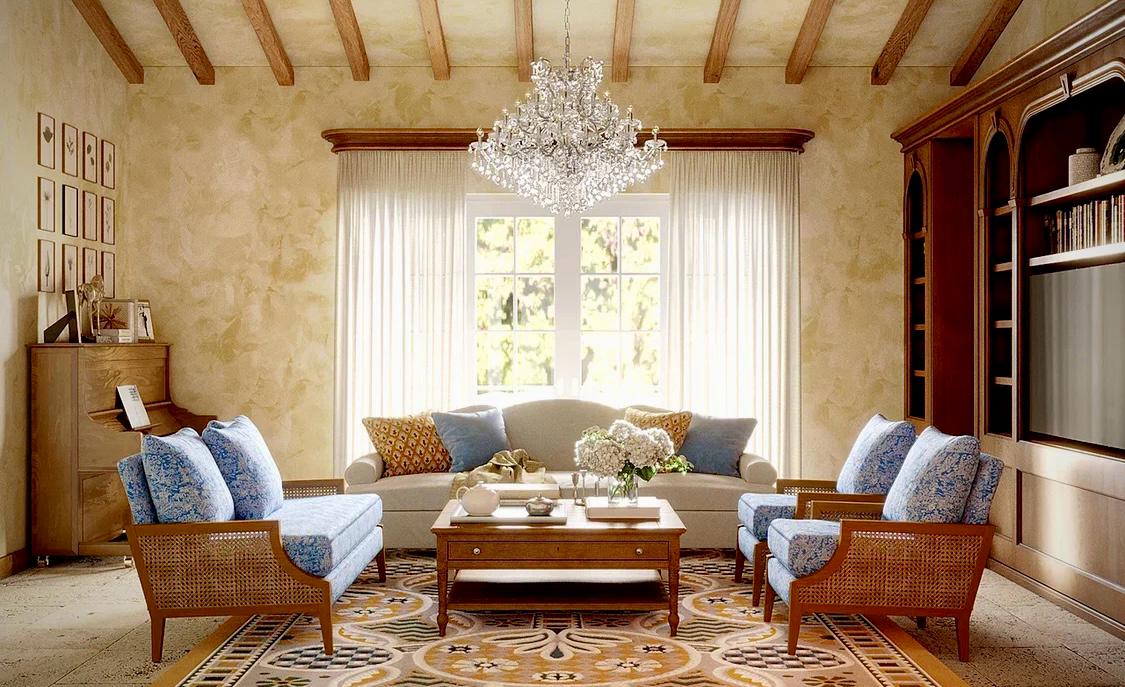
Mediterranean interior style today is not just a white-and-blue palette, rattan, and marine-themed decor.
In a well-designed contemporary project, the Mediterranean essence is conveyed much more subtly — through architecture, light, natural materials, proportions, and the connection of the house with the surrounding landscape.
This is particularly important on the French Riviera, where the interior cannot be considered separately from the location itself. The sea, intense sunlight, rocky landscape, Mediterranean vegetation, and the region's historical architecture already create a very strong context. The designer's task is not to compete with it but to use it effectively.
Features of Mediterranean Style
The Mediterranean style encompasses numerous architectural traditions — from the south of France, Italy, Spain, Greece, and other coastal regions. Therefore, there is no single formula for such an interior.
On the French Riviera, the combination of French architectural culture with a more relaxed southern lifestyle is particularly characteristic. In contemporary projects, this is primarily expressed through natural materials, a calm yet complex palette, ample natural light, and a direct connection between interior spaces and terraces, gardens, and the surrounding landscape.
The interior can be minimalist or more decorative, modern or built around the historical architecture of a villa — yet it can still maintain its Mediterranean character.
Why It's Not "Nautical Style"
The search term "nautical style villa interior" reflects perhaps the most common misconception about southern homes. To create the atmosphere of the French Riviera, it is not necessary to use blue stripes, shells, anchors, or paintings of seascapes.
If the Mediterranean Sea is indeed visible from the house, it certainly does not require decorative imitation inside.
We prefer to work with the space itself: revealing views, properly organizing natural light, and using materials and shades that naturally interact with the architecture and landscape. The Mediterranean character of the interior should be felt, not declared.
Natural Materials
Materials are fundamentally important for such an interior. Natural stone, travertine, limestone, marble, wood, plaster, ceramics, linen, and other tactile materials exist particularly harmoniously in the architecture of the south.
However, naturalness alone does not create a good interior. The combination of textures, the scale of the stone, the shade of the wood, the surface treatment, and how the material changes under natural light throughout the day are all crucial.
On the French Riviera, the light is very intense, so the same color or stone can appear completely different here than in a Paris apartment or a showroom in Milan. This is why it is advisable to select materials specifically for each project and, whenever possible, check their samples under natural light.
Palette of the French Riviera
French Riviera style interior does not have to be white or beige. The palette can be based on shades of natural stone, sand, limestone, earth, wood, and sun-bleached vegetation.
It beautifully incorporates complex grays, tobacco, terracotta, olive, muted greens, and deep browns. Blue can also be present, but more as part of the overall composition rather than as a mandatory reference to the sea.
The key is that the interior should not appear artificially "thematic."
How to Apply It in a Villa Interior
Architecture is More Important than Decor
The Mediterranean character of a house is primarily shaped by its architecture. The proportions of rooms, the height and shape of openings, the flow between indoor and outdoor spaces, the positioning of windows, and the perspective onto the garden or sea are far more significant than decorative items.
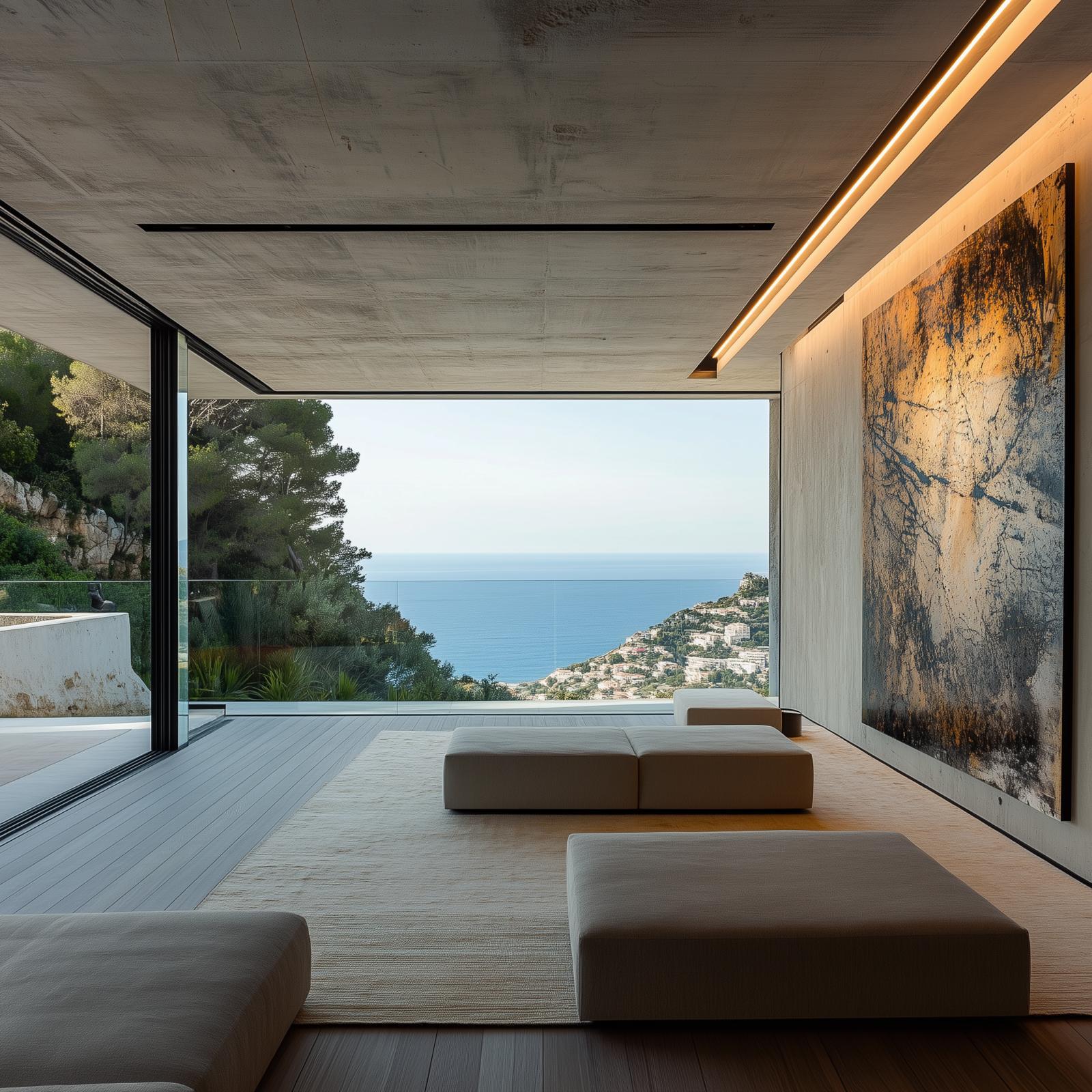
In an old villa, we can preserve and highlight the existing stone, arches, beams, terracotta floors, or other characteristic elements. In modern architecture, the same sensations are created differently — through large openings, clean volumes, natural stone, wood, and minimal visual noise.
Therefore, before choosing furniture and decor, we work with the space itself.
House and Terrace as a Unified Space
One of the main features of life on the French Riviera is that for a significant part of the year, the house exists simultaneously inside and outside. The terrace here is not just an additional area with outdoor furniture: it becomes a full extension of the living room, dining room, or kitchen.
Thus, it is especially important to consider the interior and exterior simultaneously. Materials, color schemes, furniture, lighting, and even visual axes should create a sense of a single space. When the doors are open, the boundary between the living room and terrace almost disappears.
Climate Must Be Considered from the Project Stage
Modern Mediterranean design is not only about aesthetics but also about the architecture's proper response to the climate. A beautiful interior on the coast must be adapted to local conditions.
Large glazing provides excellent light and views but simultaneously creates overheating issues. Therefore, it is essential to plan sun protection, shutters, blinds, curtains, the quality of window units, ventilation, and air conditioning in advance.
Materials for terraces and pool areas must be designed to withstand intense sunlight, humidity, and temperature fluctuations. Textiles should also be chosen with usage in mind, especially for spaces directly connected to the garden, pool, and terrace.
Furniture: Not Just Rattan
Another stereotype of Mediterranean interiors is an abundance of wicker furniture. Rattan can indeed work beautifully in certain contexts, but it is by no means obligatory.
On the French Riviera, modern Italian furniture, French modernism, mid-20th-century items, and collectible design can blend perfectly with historical architecture and natural materials. It is often the combination of different periods that makes the interior feel more natural and individual.
The house should not look as if all the furniture was purchased at once specifically to create a certain "style."
Provence and Côte d’Azur Are Not the Same
Provence style interior on the French Riviera and villa interiors on the French Riviera should not be perceived as synonyms. Provence has its own architectural tradition, materials, palette, and character.
Monaco, Cap Ferrat, Cannes, Antibes, or Saint-Tropez may suggest a completely different architectural environment and a different level of formality in the interior.
Therefore, Studio Takaya does not strive to reproduce a conventional "Mediterranean style." We primarily study the house itself, its architecture, history, location, views, and the lifestyle of the owners, and then determine what this particular interior should be.
Mediterranean Interior by Studio Takaya
For us, an interior on the French Riviera begins with the place. We strive to preserve what has architectural value, reveal the potential of the existing space, and create a natural connection between the interior and the surrounding environment.
Natural materials, art, vintage and modern items, custom-designed furniture, and architectural details are selected not to conform to a specific style but to create a cohesive and natural interior for this house.
A good Mediterranean interior style should not look like a decoration. It should create the feeling that this house has always belonged to this place.
We have separately analyzed the differences of the Provençal tradition in the guide "Provence Style Interior on the French Riviera."